Thermal Imaging Leak Detection in Quincy, MA
Trusted by 165+ Homeowners
Hidden Water Leaks in Your Quincy, MA Home: What to Do Now
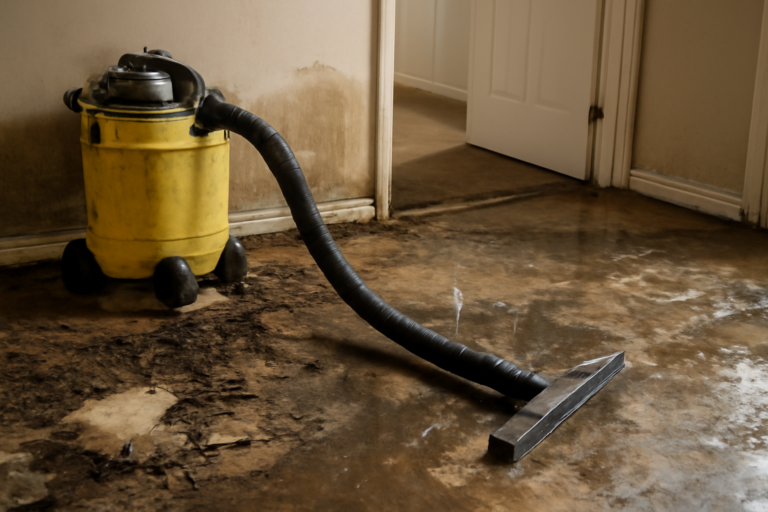
You’re in the basement, and you notice water pooling around the foundation. You’ve been hearing strange noises coming from the walls, and now you smell a musty odor. It’s a bad sign – you’ve likely got a hidden water leak in your Quincy, MA home, and it’s not going to fix itself. Our team is here to help you detect and repair the issue fast, before it causes more damage.
Don’t let a hidden water leak ruin your home. Our team has helped 165+ satisfied customers in the area, and we’re here to help you too. We understand the stress and uncertainty that comes with a water leak, and we’re committed to making the process as smooth and hassle-free as possible.
- We use advanced thermal imaging technology to detect even the smallest leaks, saving you time and money in the long run.
- Our team has years of experience in water damage restoration, so you can trust us to get the job done right.
- We offer a 100% satisfaction guarantee, so you can have peace of mind knowing you’re in good hands.
How Thermal Imaging Leak Detection Actually Works
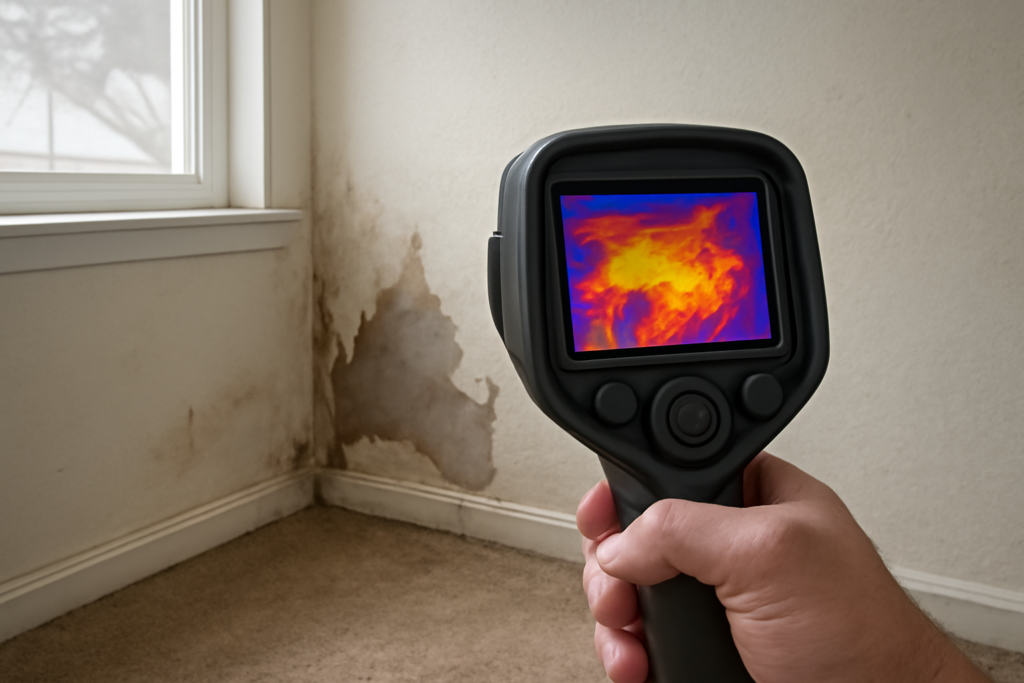
Our team uses specialized equipment to detect water leaks in your Quincy, MA home. We start by using thermal imaging cameras to scan your walls, floors, and ceilings for any signs of moisture. If we find a leak, we’ll use specialized sensors to measure the moisture levels and find out the extent of the damage. From there, we’ll develop a customized drying plan to get your home back to normal as quickly as possible.
Step 1: Inspection and Detection
Our team will use thermal imaging cameras to scan your home for any signs of moisture. This helps us identify the source of the leak and find out the best course of action.
Step 2: Moisture Reading and Assessment
We’ll use specialized sensors to measure the moisture levels in your home and find out the extent of the damage.
Step 3: Drying and Containment
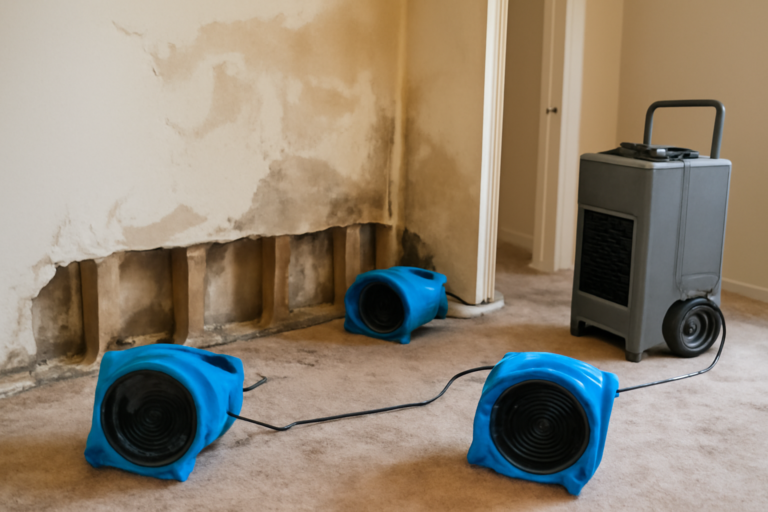
Our team will use specialized equipment to dry out your home and prevent further damage. We’ll also contain the affected area to prevent the spread of moisture.
Step 4: Repair and Restoration
Once the drying process is complete, our team will repair any damaged areas and restore your home to its original condition.
Step 5: Final Inspection and Quality Control
We’ll conduct a final inspection to ensure that your home is dry and damage-free. We’ll also provide you with a detailed report of the work we’ve done and any recommendations for future maintenance.
Don’t wait – call us now to schedule an appointment and get your home back to normal.
Warning Signs You Need Thermal Imaging Leak Detection
Catching a hidden water leak early can save you thousands of dollars in repairs and prevent further damage to your home. Here are some common warning signs to look out for:
Musty Odors That Won’t Go Away
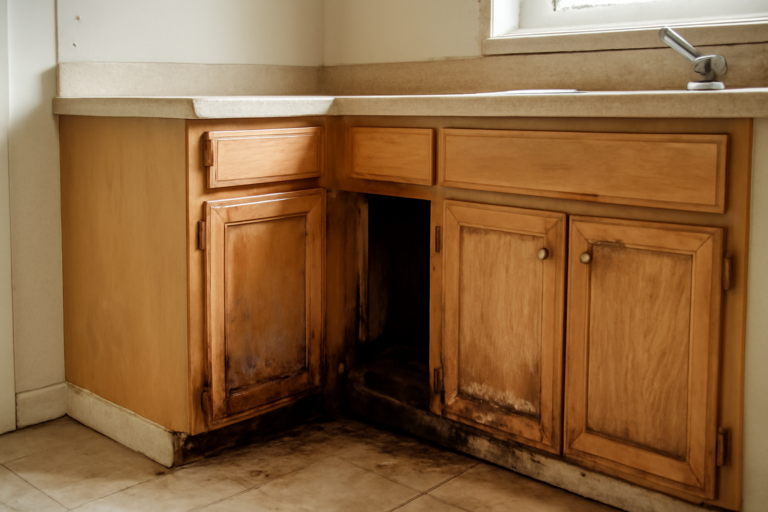
If you notice a musty or moldy smell in your home, it’s a sign that there’s a hidden water leak somewhere. Don’t ignore it – call us now to schedule an appointment.
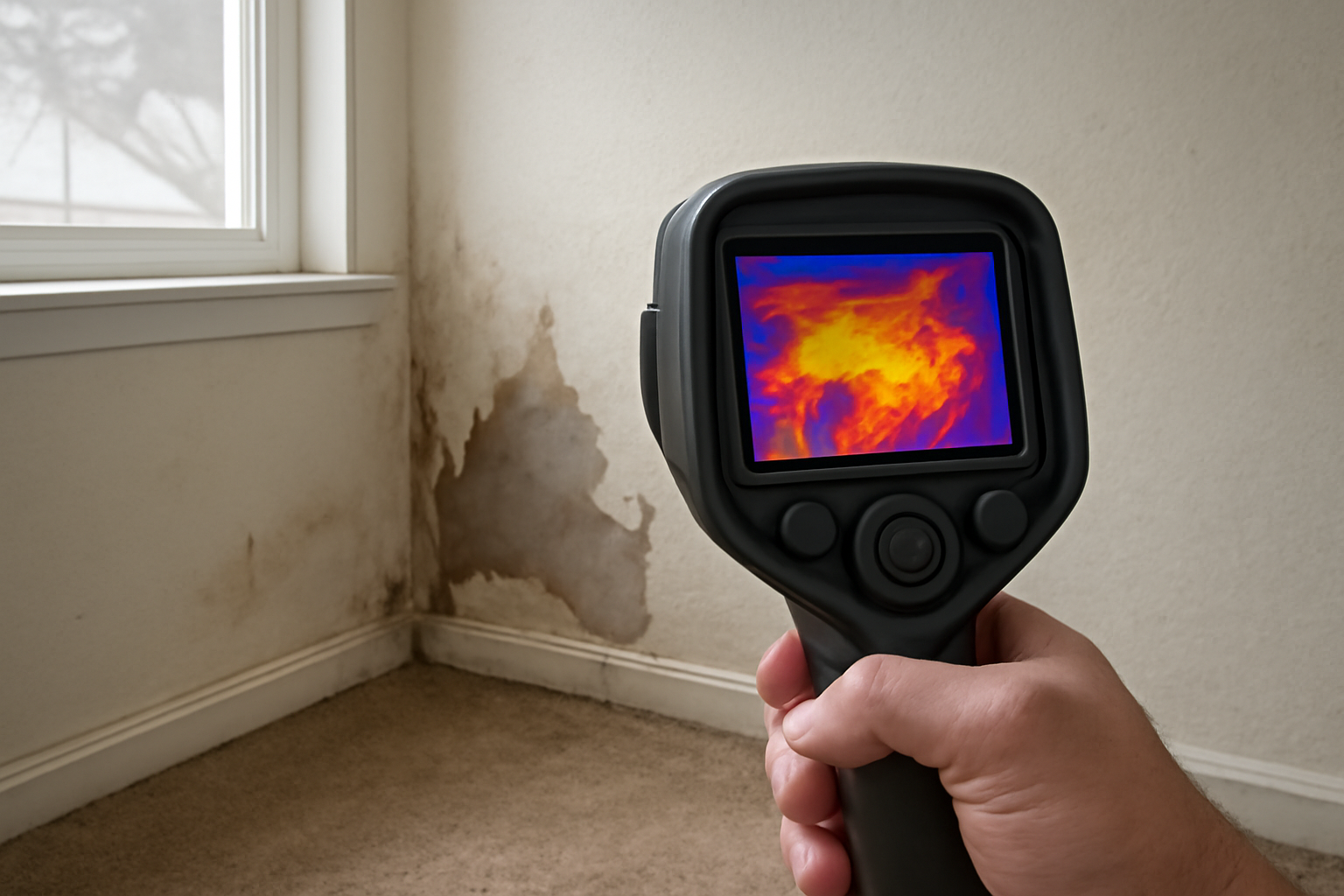
Water Stains on Your Ceiling or Walls
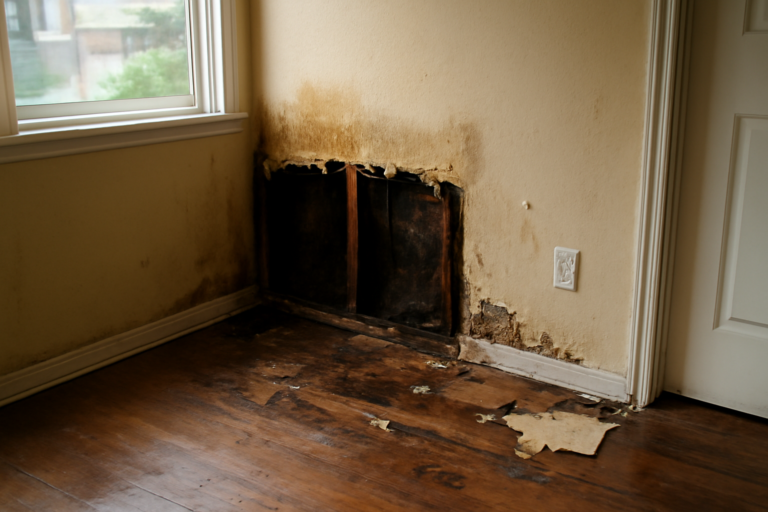
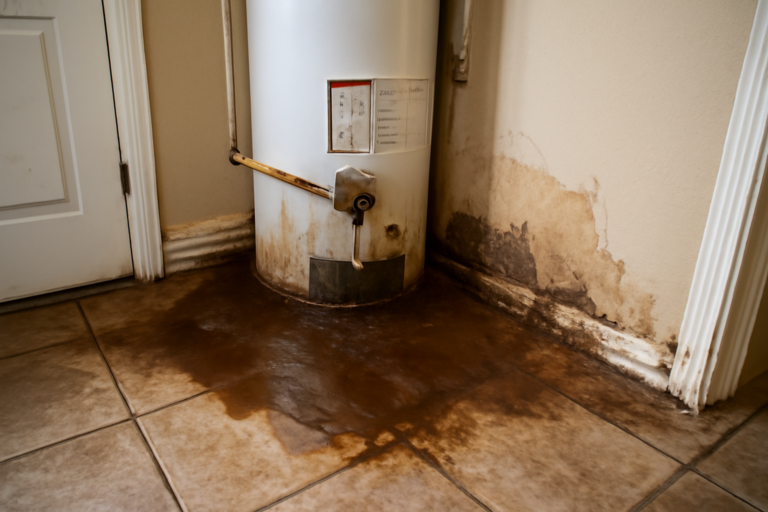
Water stains on your ceiling or walls can be a sign of a hidden water leak. If you notice any stains, call us right away to schedule an appointment.
Warped or Buckled Flooring
Warped or buckled flooring can be a sign of a hidden water leak. If you notice any damage to your flooring, call us now to schedule an appointment.
Increased Water Bills
If your water bills are suddenly higher than usual, it could be a sign of a hidden water leak. Call us now to schedule an appointment and get to the bottom of the issue.
Unexplained Noises
Unexplained noises in your home, such as creaking or groaning, can be a sign of a hidden water leak. If you notice any unusual noises, call us right away to schedule an appointment.
Thermal Imaging Leak Detection vs. DIY: When to Call a Pro
| Situation | DIY? | Call a Pro? | Why |
|---|---|---|---|
| Small leak in a bathroom or kitchen | Yes | No | You can likely fix the leak yourself with a few basic tools. |
| Hidden leak behind a wall or in a ceiling | No | Yes | You’ll need specialized equipment to detect and repair the leak. |
| Large-scale water damage from a burst pipe or natural disaster | No | Yes | You’ll need professional help to contain and repair the damage. |
| Uncertainty about the source or extent of the leak | No | Yes | You’ll need a professional to help you find out the best course of action. |
Don’t risk further damage to your home by trying to fix a hidden water leak yourself. Call us now to schedule an appointment and let our team of experts handle the job.
Thermal Imaging Leak Detection Cost in Quincy, MA
The cost of thermal imaging leak detection in Quincy, MA can vary depending on the severity and size of the leak, as well as the local conditions in your area. Here are some estimated price ranges for common scenarios:
| Service | Typical Price Range | What Affects Cost |
|---|---|---|
| Small leak detection and repair | $500 – $2,500 | Size of the leak, location, and type of repair needed |
| Hidden leak detection and repair behind a wall or in a ceiling | $1,000 – $5,000 | Size of the leak, location, and type of repair needed |
| Large-scale water damage from a burst pipe or natural disaster | $5,000 – $20,000 | Size of the damage, location, and type of repair needed |
| Uncertainty about the source or extent of the leak | $1,000 – $5,000 | Size of the leak, location, and type of repair needed |
Exact pricing will depend on an on-site assessment and a free estimate from our team. Call us now to schedule an appointment and get a better understanding of the costs involved.
Service Areas Near Quincy, MA
We serve the following nearby communities: Braintree, Weymouth, Hingham, Hull, Scituate, Marshfield, Duxbury, Hanover, Norwell, Pembroke, Hanson, Whitman, Rockland, Abington, Holbrook, Randolph, Milton, Dorchester, Jamaica Plain, Allston, Brighton.
Common Questions About Thermal Imaging Leak Detection
Will I need to vacate my home during the repair process?
No, you can usually stay in your home during the repair process. But, in some cases, we may need to contain the affected area to prevent further damage. We’ll work with you to find out the best course of action.
How long will it take to detect and repair the leak?
The time it takes to detect and repair the leak will depend on the severity and size of the leak, as well as the type of repair needed. In general, we can detect and repair small leaks within 24-48 hours, while larger leaks may take 3-5 days to repair.
Will I need to pay for any more repairs or maintenance?
Yes, in some cases, you may need to pay for more repairs or maintenance to ensure that your home is safe and secure. We’ll work with you to find out the best course of action and provide you with a detailed estimate of the costs involved.
How can I prevent hidden water leaks in my home?
Regular maintenance is key to preventing hidden water leaks in your home. Check your pipes and fixtures regularly for signs of wear and tear, and address any issues quickly. You should also consider installing a water leak detection system in your home to alert you to any potential issues.
Check Our Other Relevant Services
Serving Quincy, MA And Nearby Areas